• Home
  • The Crescent Nebula (NGC 6888) - An Emission Nebula in the Constellation Cygnus

The Crescent Nebula (NGC 6888) - An Emission Nebula in the Constellation Cygnus

thumbnail

Basic Information

  • Name: Crescent Nebula (NGC 6888), also known as Caldwell 27 or Sharpless 105.
  • Type: Emission Nebula
  • Location: Constellation Cygnus
  • Distance from Earth: Approximately 5,000 light-years.
  • Size: Spans about 25 light-years across.

Physical Characteristics

  • The Crescent Nebula is formed by the interaction between the fast stellar wind from the Wolf-Rayet star WR 136 (HD 192163) and the slower-moving material ejected by the star during its earlier red giant phase.
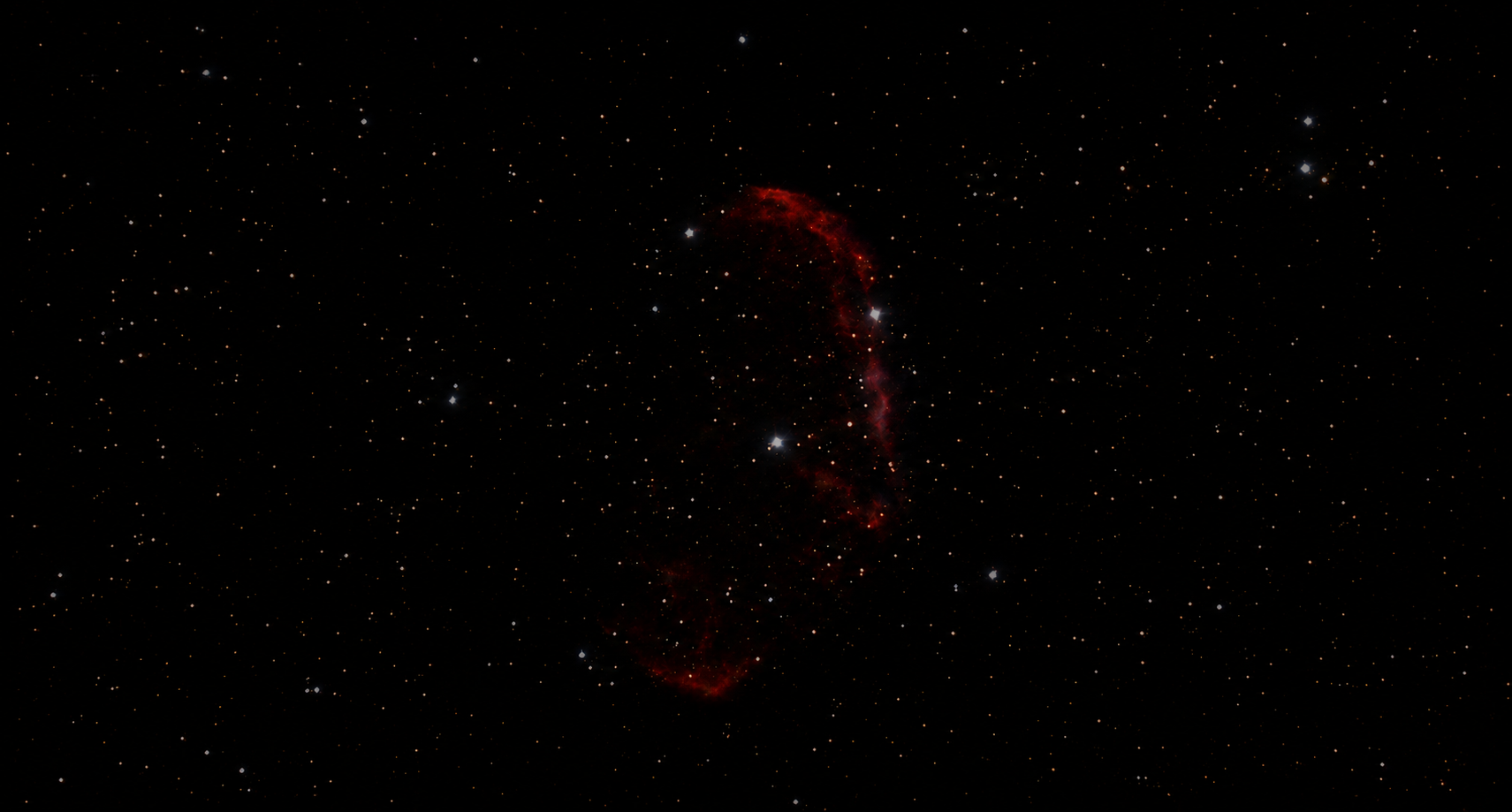
  • This interaction creates a bubble-like structure of ionized gas, glowing brightly in hydrogen and oxygen emission lines.
  • The nebula's intricate structure includes filaments and knots of gas, which are illuminated by the intense radiation from WR 136.

Discovery and History

  • The Crescent Nebula was discovered by William Herschel in 1792.
  • It is a popular target for both professional astronomers and astrophotographers due to its unique shape and vibrant colors.

Observational Highlights

  • Visibility: The Crescent Nebula is located in the rich star fields of the constellation Cygnus, making it best observed during the summer months in the Northern Hemisphere.
  • Best Observing Tools: A telescope with a wide field of view and narrowband filters (such as H-alpha and OIII) is ideal for observing the nebula's intricate details and colors.
  • Astrophotography: The nebula is a favorite target for astrophotographers, who often use narrowband imaging to capture its glowing hydrogen and oxygen emissions.

Interesting Facts

  1. Wolf-Rayet Star: The central star, WR 136, is a massive, evolved star nearing the end of its life. It is shedding its outer layers at an incredible rate, creating the nebula.
  2. Supernova Potential: WR 136 is expected to end its life in a supernova explosion, which will further enrich the surrounding interstellar medium.
  3. Shape and Name: The nebula's crescent-like shape is a result of the interaction between the stellar wind and the surrounding material, giving it its distinctive appearance.

How to Locate the Crescent Nebula

  1. Find Cygnus: Locate the constellation Cygnus in the night sky. The Crescent Nebula is situated near the bright star Sadr (Gamma Cygni), at the heart of the "Northern Cross" asterism.
  2. Use a Star Map: A detailed star map or astronomy app can help pinpoint its exact location.
  3. Enhance Visibility: Observing from a dark-sky location and using narrowband filters will improve your chances of seeing the nebula.

Andromeda galaxy shining brightest. Captured image slightly enhanced with ChatGPT.

Personal Note

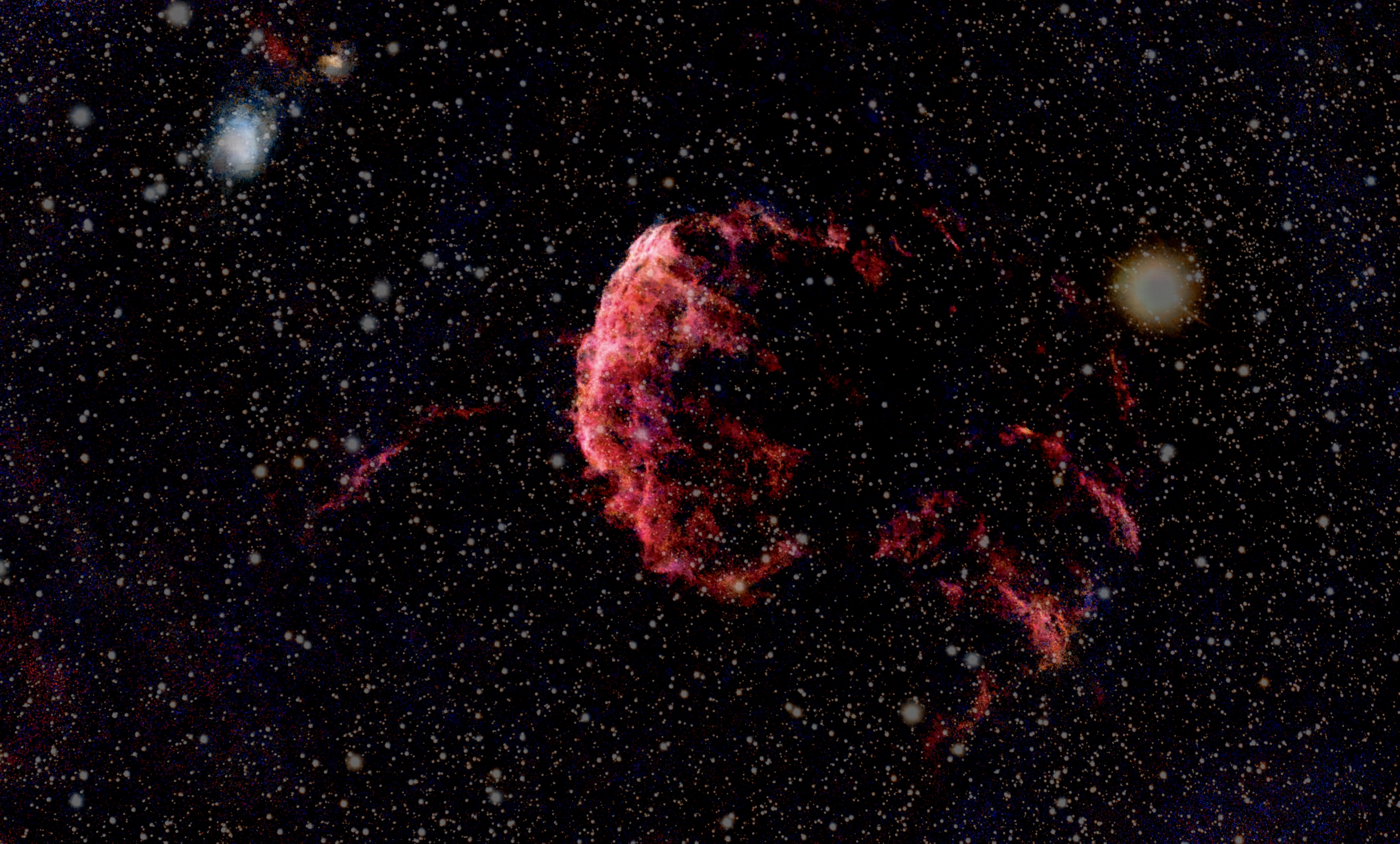
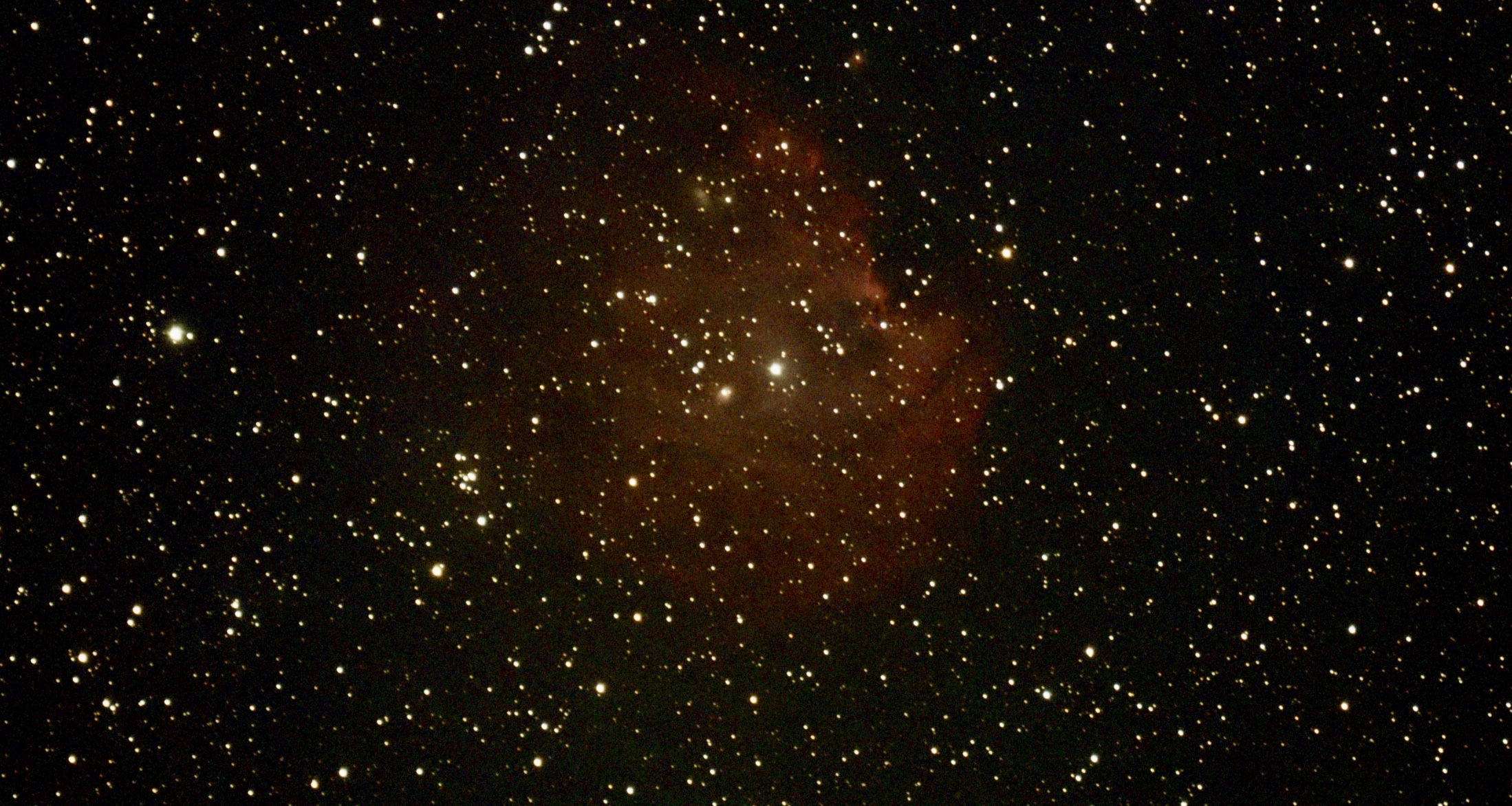
The image has been slightly colour corrected to get a more distinct view of the nebula itself. The gaseous leftover from the stellar winds of two stars required about 27 minutes of exposure. The semi-circular crescent moon-like structure coins its name.


RELATED