Basic Information
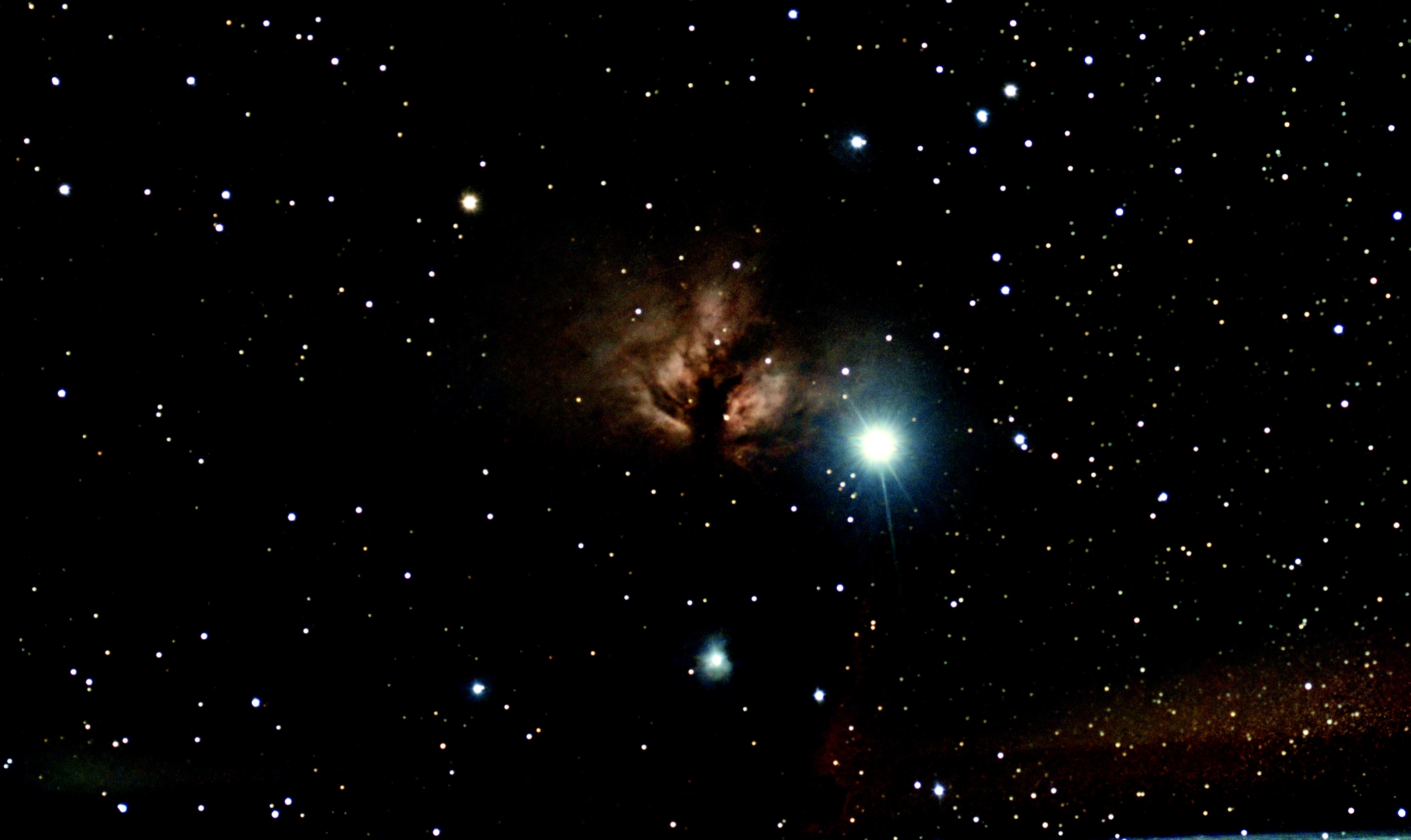
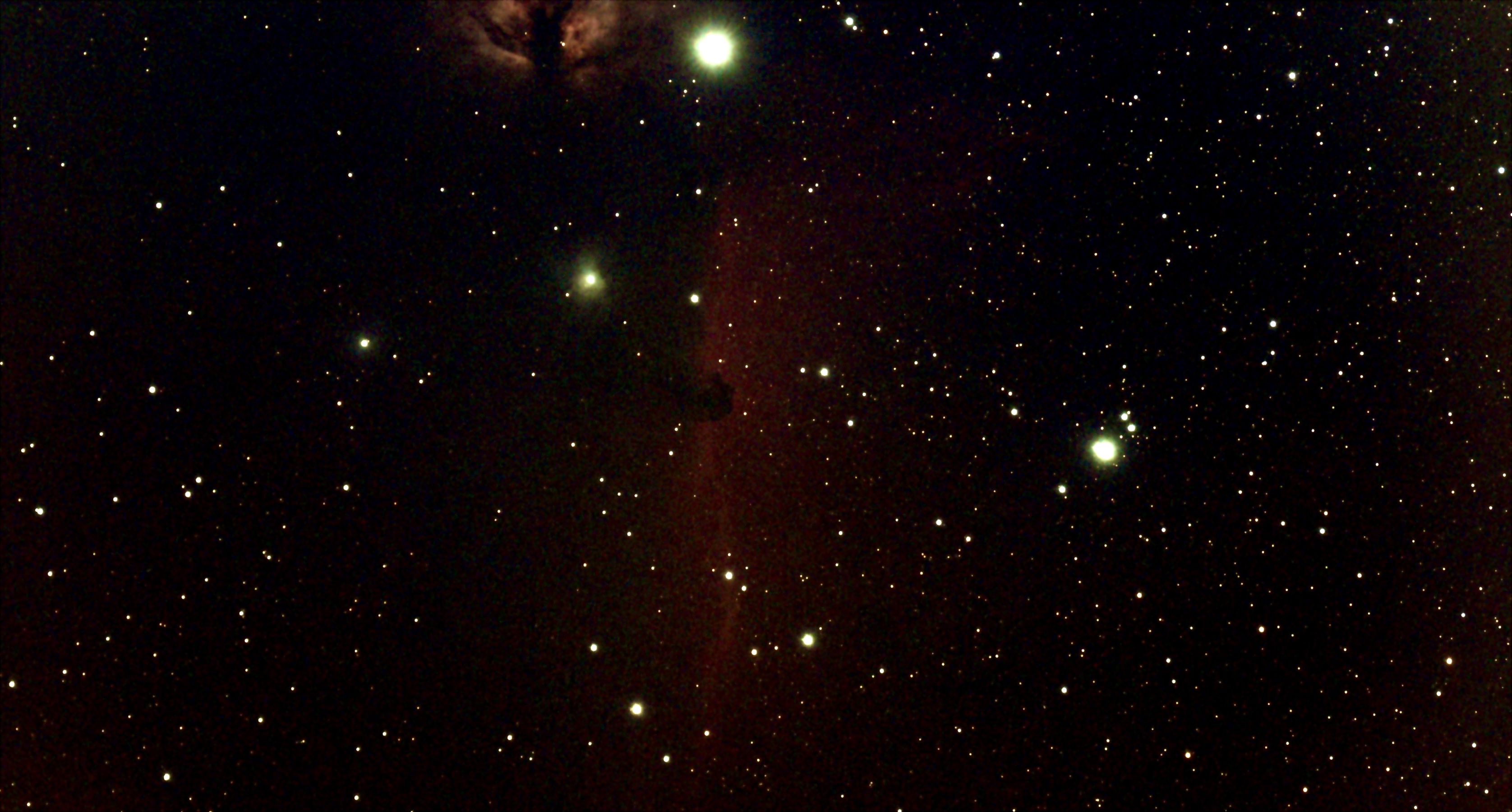
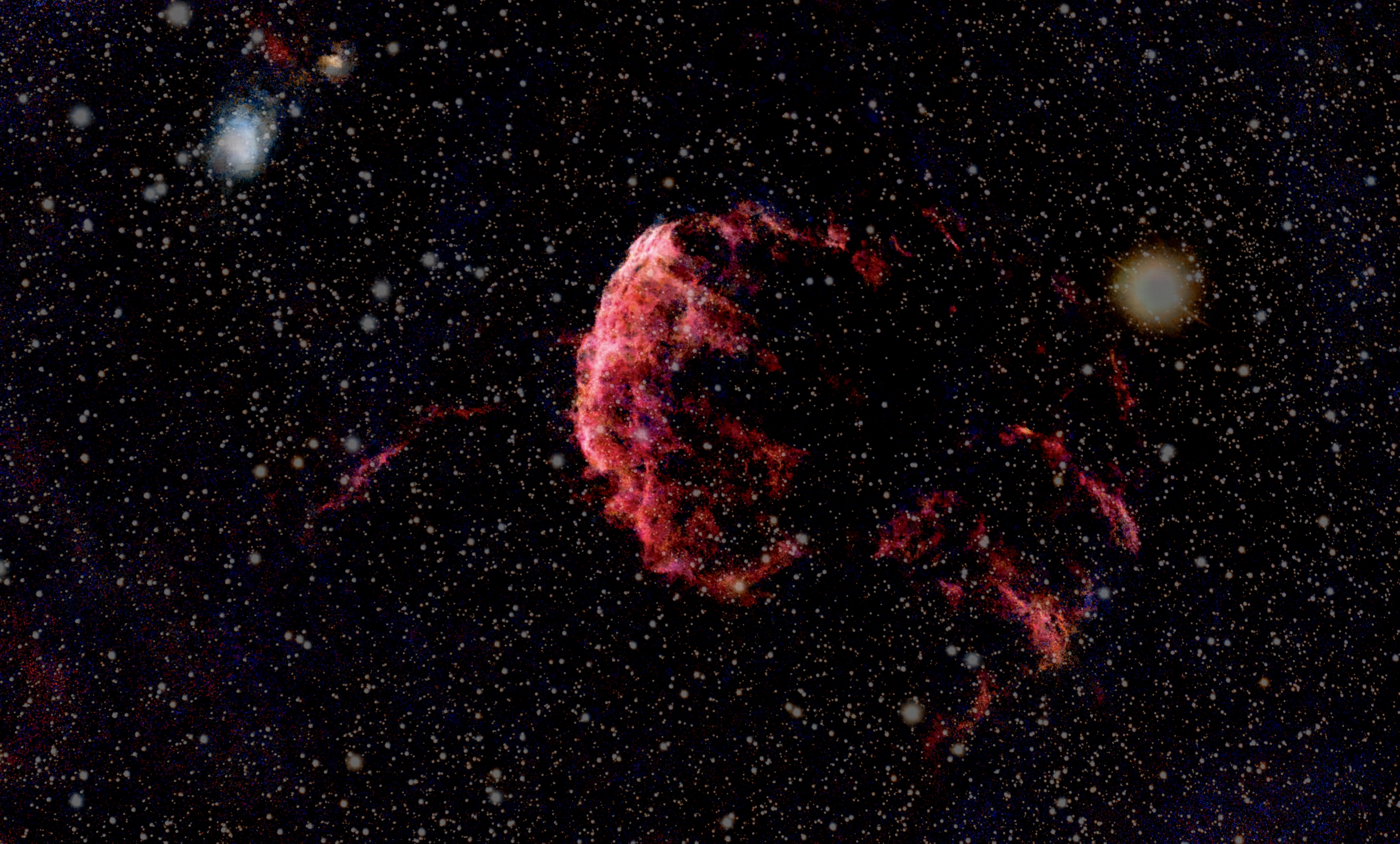
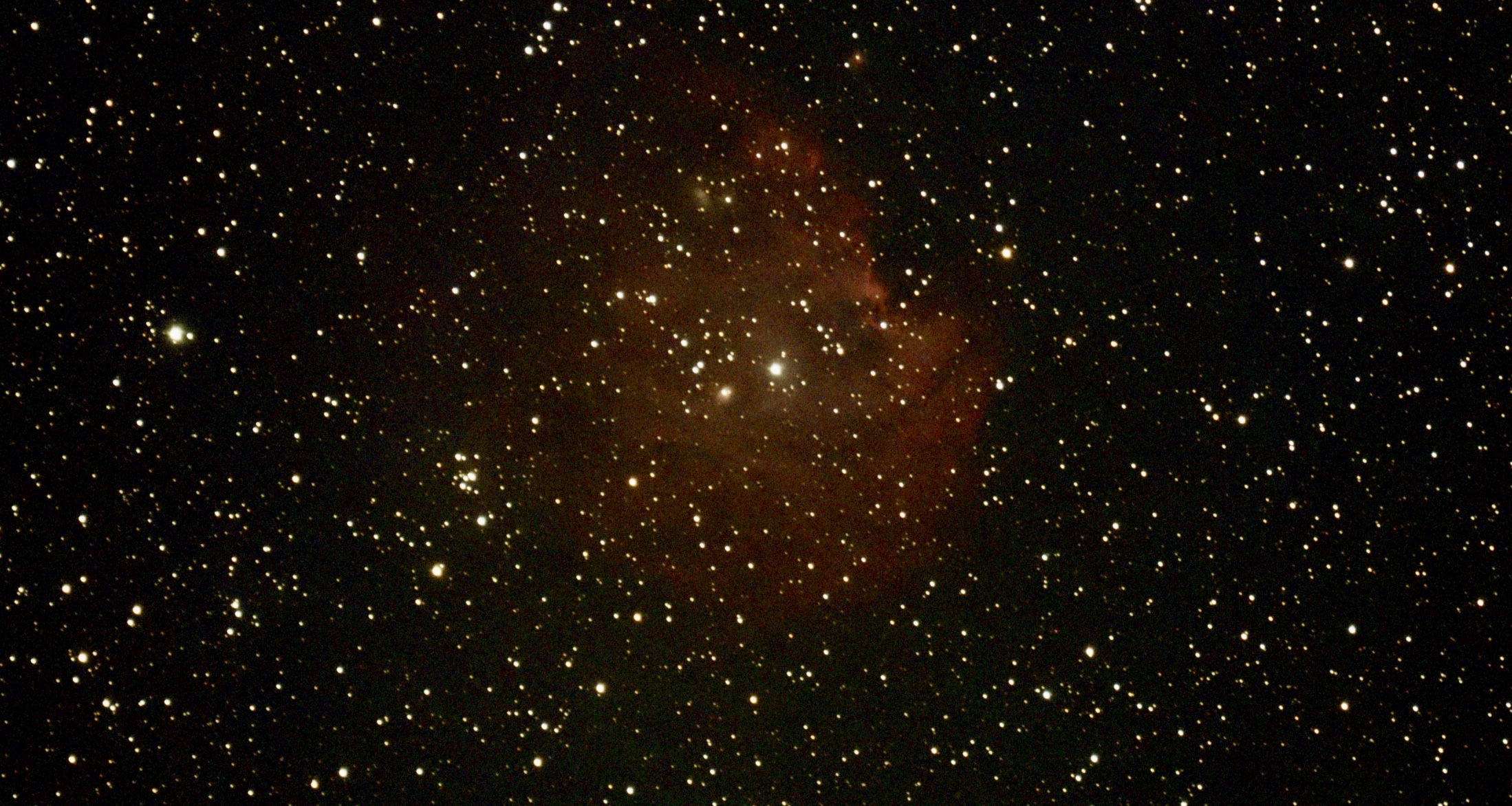
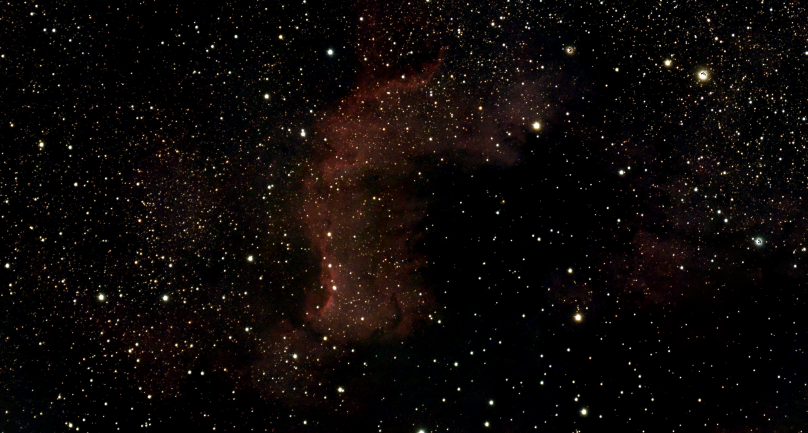
- Name: Flaming Star Nebula (IC 405), also known as Caldwell 31 or Sharpless 2-229 (Sh2-229).
- Type: Emission and Reflection Nebula.
- Location: Constellation Auriga.
- Distance from Earth: Approximately 1,500 light-years.
- Size: Spans about 5 light-years across.
- Apparent Magnitude: +6.0, making it visible with small telescopes under dark skies.
Physical Characteristics
- The Flaming Star Nebula is a mixed emission and reflection nebula, meaning it glows due to two processes:
- Emission Nebula: The reddish "flame" is caused by ionized hydrogen gas emitting light as it is energized by ultraviolet radiation from the nearby star.
- Reflection Nebula: The bluish regions are caused by starlight reflecting off surrounding dust particles.
- The nebula surrounds the runaway star AE Aurigae, a hot, bluish variable star that is responsible for ionizing the gas and illuminating the nebula.
- The nebula's intricate structure includes dark filaments of carbon-rich dust, which add to its dramatic appearance.
Discovery and History
- The Flaming Star Nebula was first cataloged as IC 405 in the Index Catalogue of nebulae and clusters.
- It is named for its fiery appearance, which resembles a flame surrounded by smoke when viewed in astrophotography.
- The nebula is a popular target for both amateur and professional astronomers due to its striking colors and proximity to other deep-sky objects in Auriga.
Observational Highlights
- Visibility: Best observed during the winter months in the Northern Hemisphere when the constellation Auriga is high in the sky.
- Best Observing Tools:
- A small telescope or binoculars can reveal the nebula's faint glow under dark skies.
- Narrowband filters (e.g., H-alpha) are highly effective for enhancing the nebula's red emission regions.
- Nearby Objects: The Flaming Star Nebula is located near other notable objects in Auriga, such as the Tadpoles Nebula (IC 410) and the Starfish Cluster (M38).
Interesting Facts
- Runaway Star: AE Aurigae, the star illuminating the nebula, is a "runaway star" that was likely ejected from the Orion Nebula region millions of years ago due to a gravitational interaction.
- Dual Nature: The combination of emission and reflection regions gives the nebula its unique appearance, with fiery red hues and smoky blue highlights.
- Astrophotography Favorite: The Flaming Star Nebula is a popular target for astrophotographers, especially when imaged in H-alpha and OIII narrowband filters, which highlight its intricate details.
How to Locate the Flaming Star Nebula
- Find Auriga: Locate the bright star Capella, the brightest star in the constellation Auriga.
- Use a Star Map: The Flaming Star Nebula is near the star AE Aurigae, which is slightly southeast of the open cluster M38.
- Enhance Visibility: Observing from a dark-sky location and using filters will improve your chances of seeing the nebula's faint details.
Personal Note
I have had this image captured for over a year, but on the night that I managed to get this image,
there was too much light pollution. The resulting image, even after the regular edits, had too much
noise. Hence, I was hesitant to upload this at all. Just today, on the 1st of July 2026, I was just
checking through my inventory and found the edited image. While AI tools got very much familiarised
during the year, I thought of trying it out. Using ChatGPT-5 to reduce the noise on my edited image,
I finally managed to get a clear and stunning image. Acted sort of a nice break after not being able
to set the telescope up for over a year.
Author
Tasnim M Ankon
Software engineer, freelance photographer and cosmology enthusiast. Photos from smart telescope (Vaonis Vespera II), description prepared with help from ChatGPT-4o. Cover photos, if edited, using GIMP, Siril and GraXpert.